KLAW members host and attend KLAW meetings on a wide variety of topics, including the production of biochar, Langdon Court open day, charcoal making, bat identificaiton, bird ringing demonstration, a hedge laying course, a visit to Nimrod and dragonfly identification. KLAW memebers have also attended an event at Knepp and a conference organised by Kent Field Club. Every year there is an Annual General Meeting in March.
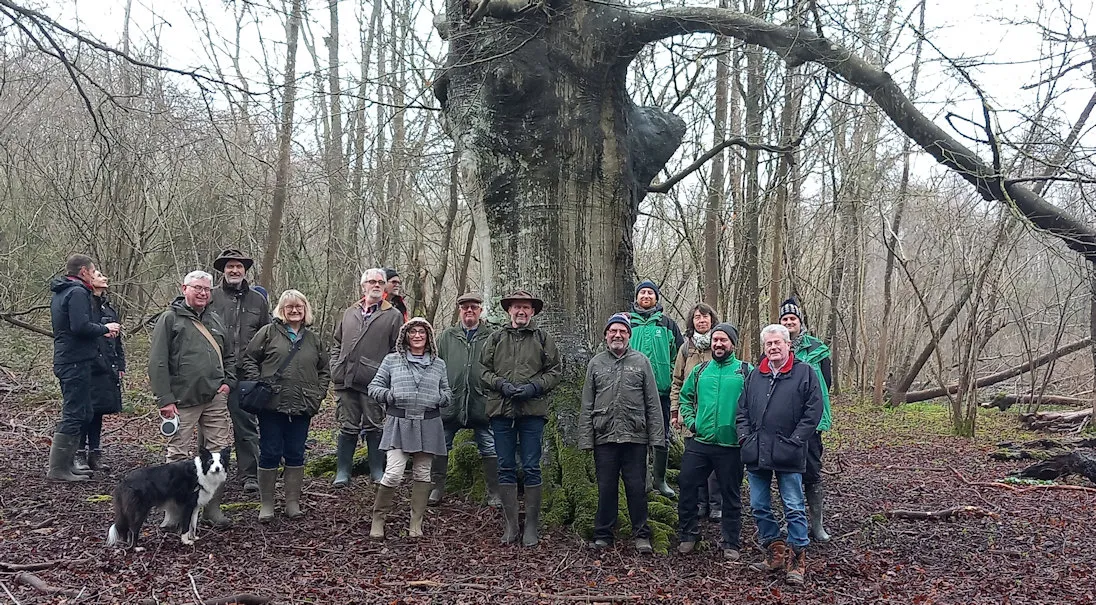
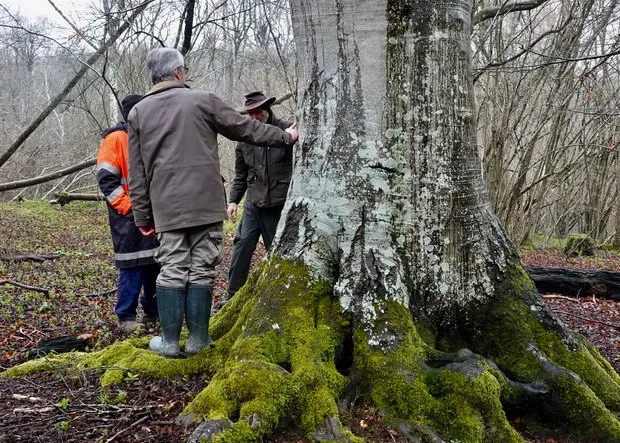
In March three representatives from the Forestry Commission: Elliot Carpenter, Jonathan Varney and Rob Coltman, plus KLAW members attended an event at Tway Wood, hosted by Amanda and Rob. The event was on "Managing Woodlands for Wildlife".
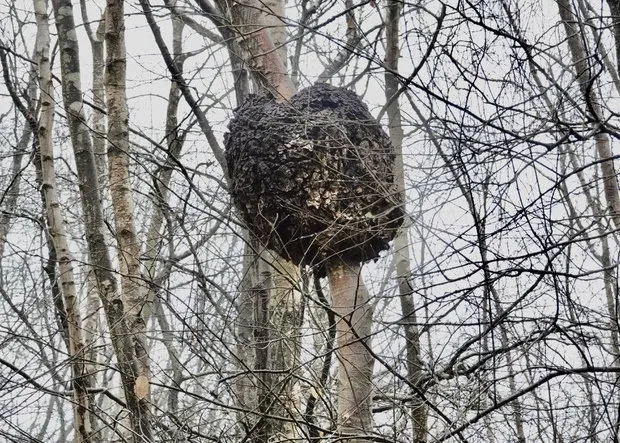
This popular visit, enjoyed by all the attendees, included a walk through Denge Wood, including Bonsai Bank and Tway Wood, viewing the first signs of the orchids that Bonsai Bank is known for, and the wide variety of woodland plants and tree species. Members had the opportunity to discuss their particular interests with other KLAW members. The Forestry Commission experts were able to answer questions on topics ranging from the Forestry Commission's strategy, their role in wildlife management, what to plant where, woodland pests through to grants available for woodland management.
The Forestry Commission also provided links to a wide variety of information on managing woodlands which are given below the photos from the event.
Applying online for a felling licence
Managing and protecting wildlife
Wildlife licences: when you need to apply
Tree planting and woodland creation: overview
Woodland creation planning Grant
Woodland creation offer (England)
Ecological site classificaiton tool
Eight toothed spruce bark beetle
A farmer's guide to managing ash dieback
Managing oak processionary moth
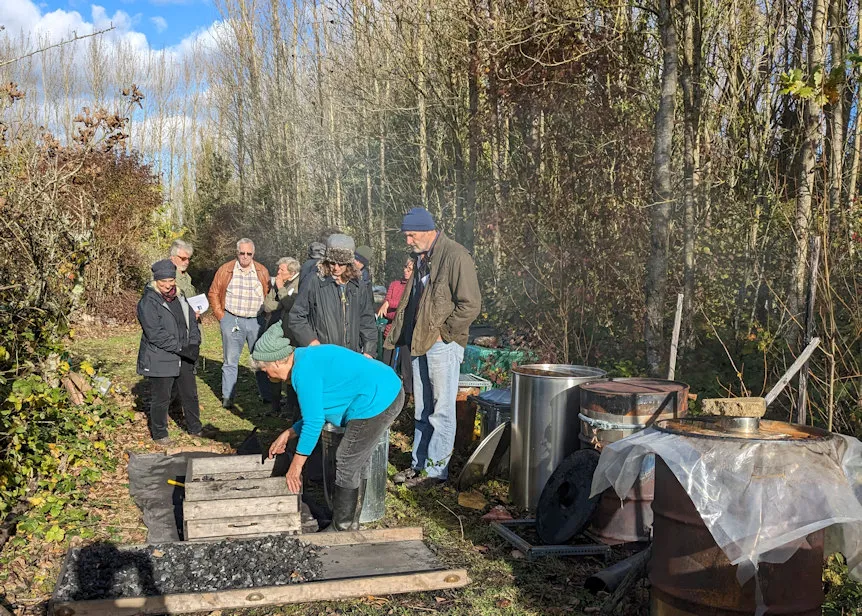
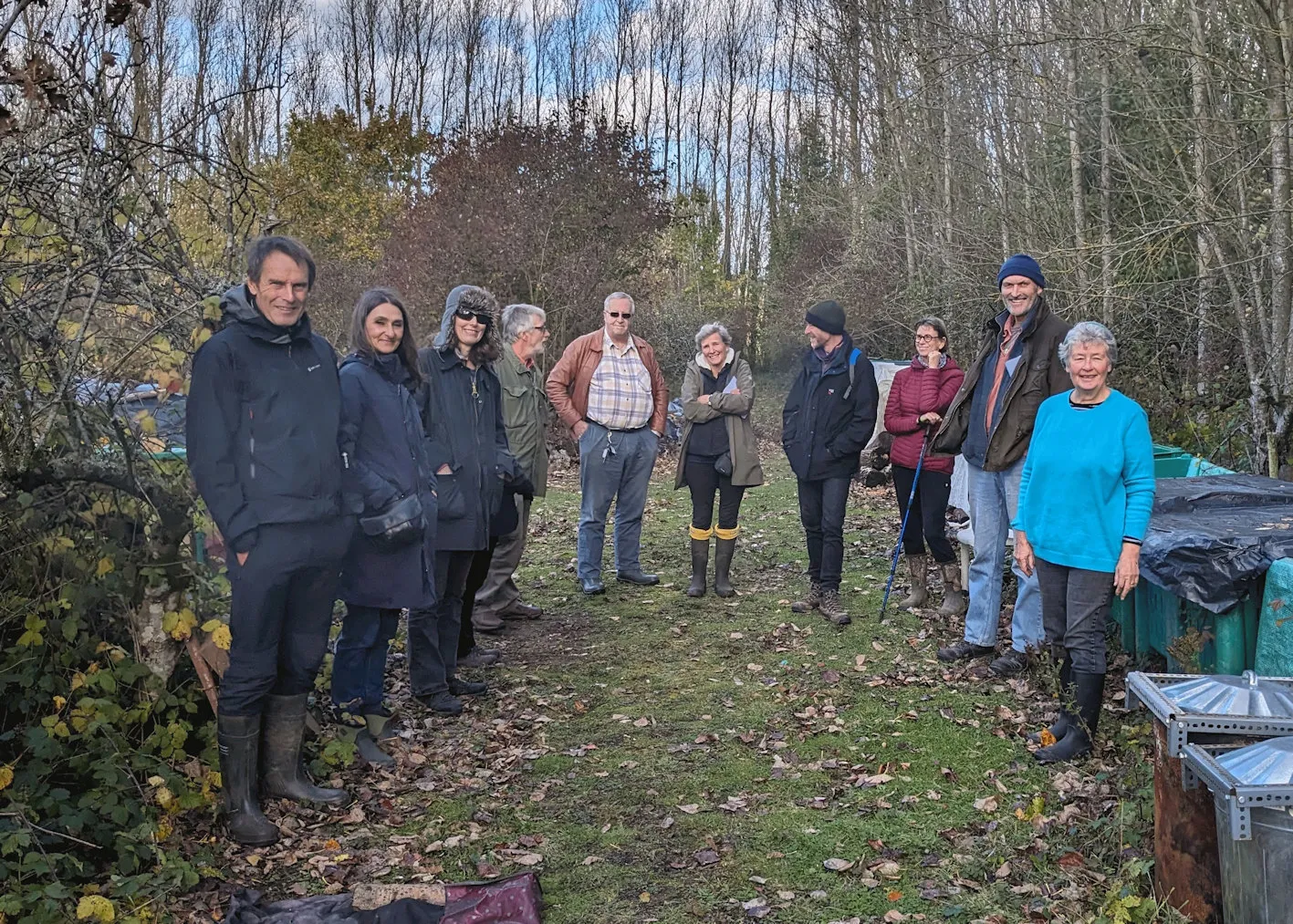
KLAW members plus Tim Owens of Kent Downs Area of Outstanding Natural Beauty attended an event at Mystole on the production of biochar. This event started with an informal presentation on the strengths and weaknesses of small scale production of biochar. Then we had a practical demonstration of what sizes of wood to use, how to pack the steel drums used to turn the wood into charcoal and the stages of the project (such as sieving the charcoal to test the effect of particle size). There were very interesting discussions on biochar, involving experts, enthusiasts and those new to the subject of biochar. At the end there was a walk round Mystole to see the work done on improving the habitat for ground nesting birds, such as nightingales and turtle doves. More details of the project are given in the Research section by clicking here.
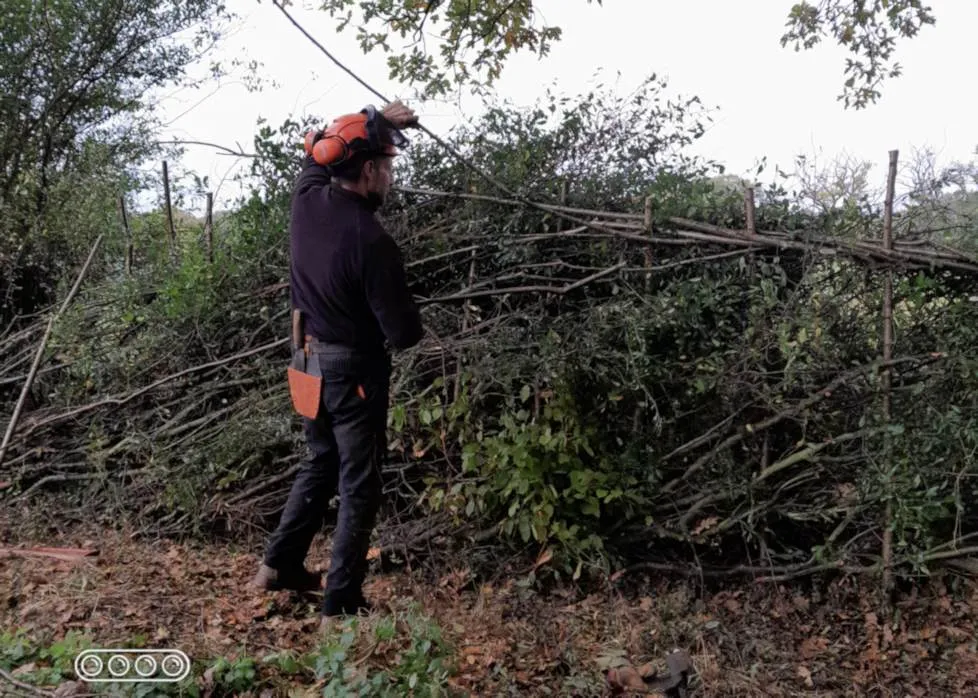
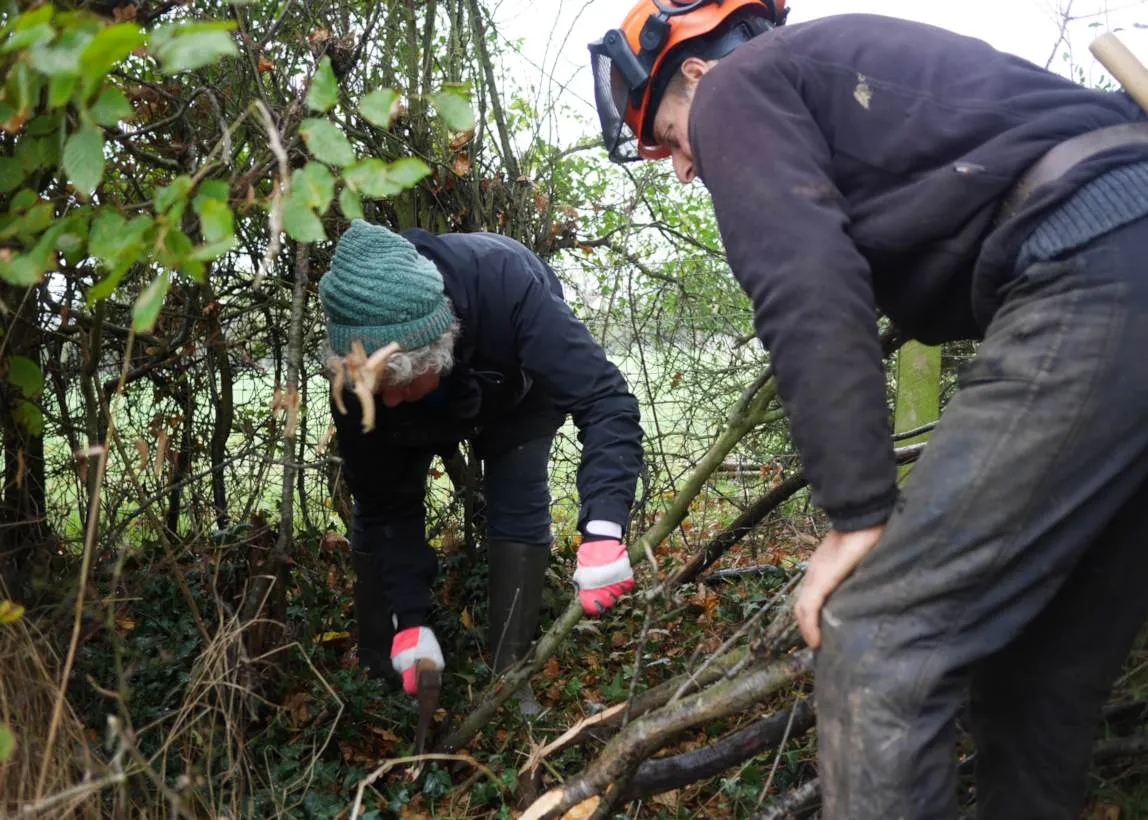
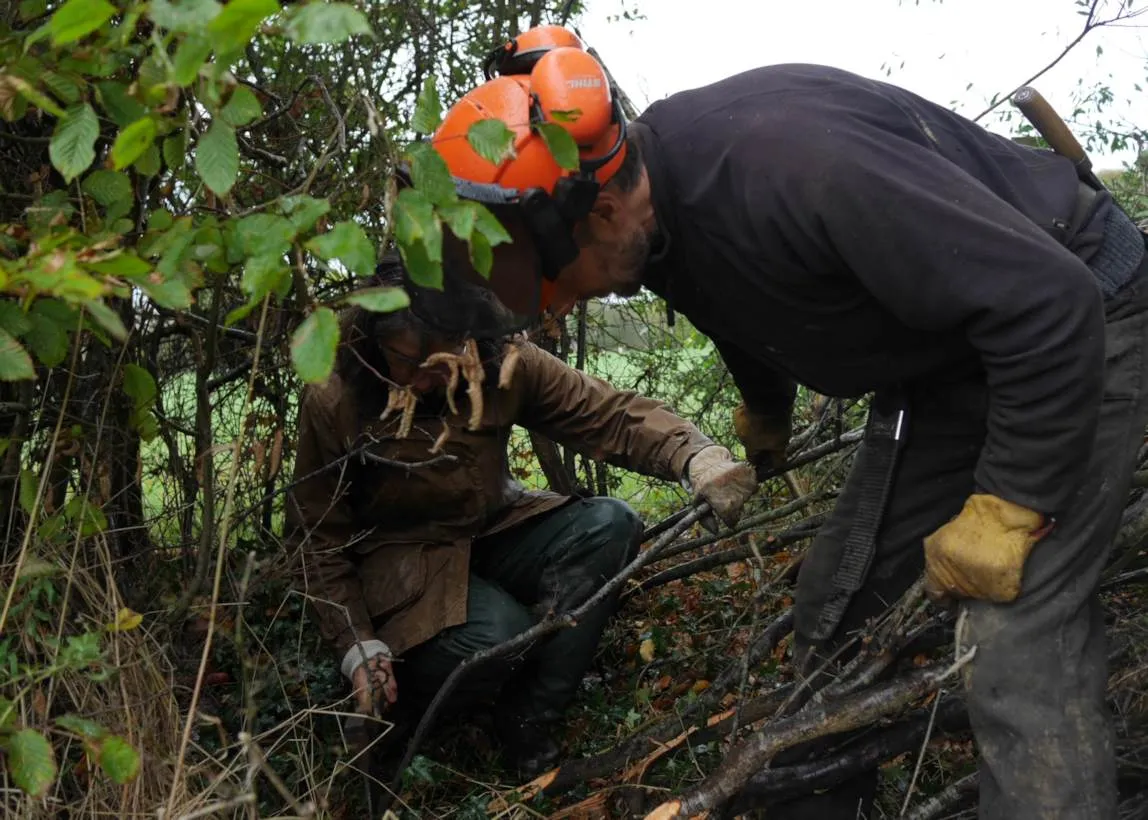
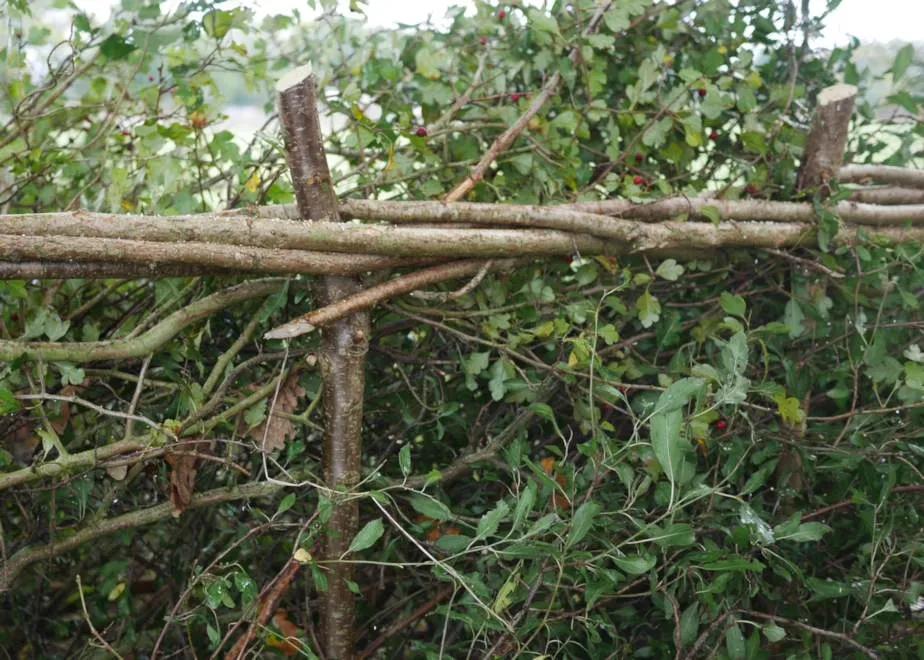
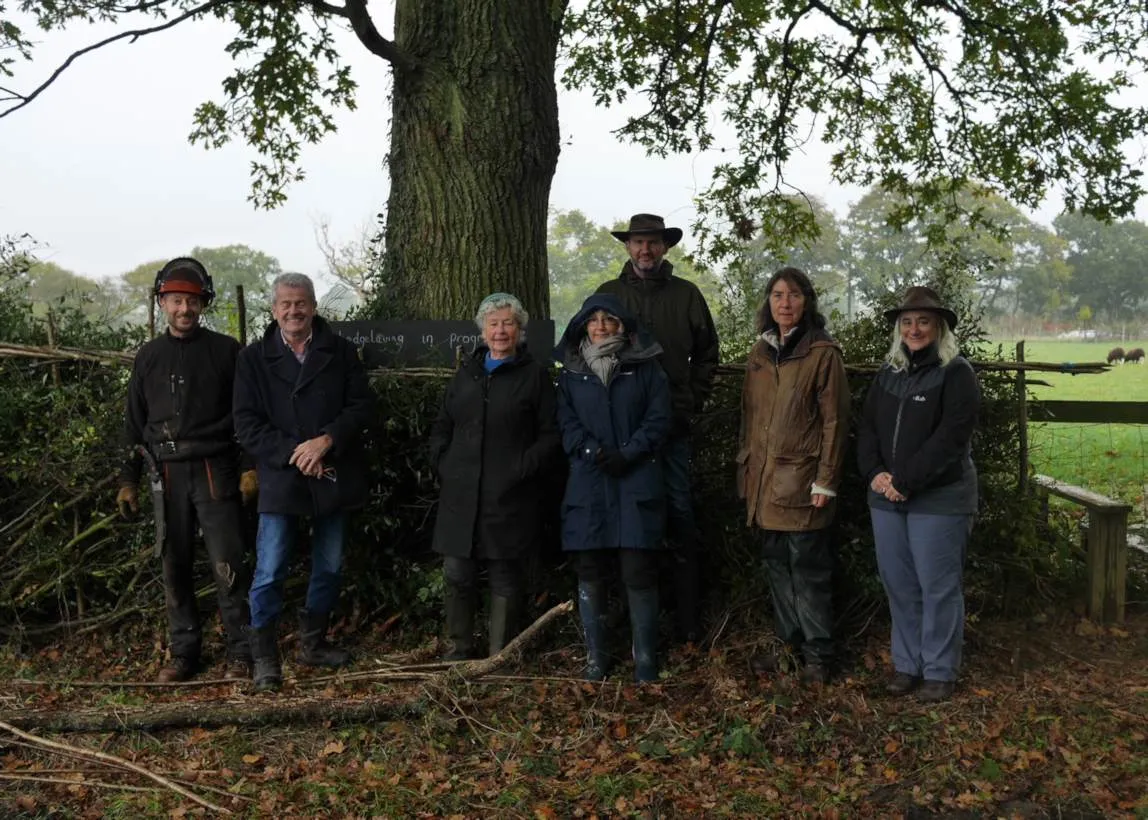
Several members of KLAW: Keith, Jenny, Genevieve, Lesley, Amanda and Rob attended an excellent training course on hedgelaying, given by expert and prize-winner Rob Graham. Rob talked us all through the best tools, techniques and safety measures. Rob also explained the various styles of hedgelaying, including the "rope" style which he demonstrated, with flexible branches twisted along the top of the hedge to hold the laid hedge firmly in place - as well as giving a very attractive finish to the hedge. We each then had the opportunity to try laying a section of hedge, under Rob's watchful and patient guidance.
The course ended with a hot drink and delicious home-made biscuits, with thanks to Sally and then a walk round Claringbolds, Rob and Sally's smallholding. This included meeting Rob and Sally's rare breed and very special sheep.
More details of Rob's courses and environmental work are given on their Instagram pages. Click here for more information.
Several members of KLAW: Ali, Tom, Jenny, Keith and Ed, were able to visit Knepp for an inspirational meeting of like-minded people, mainly from Kent. This was coordinated by the Knepp estate and Nicole Khan, the RSPB's Kent Turtle Dove Conservation Officer.
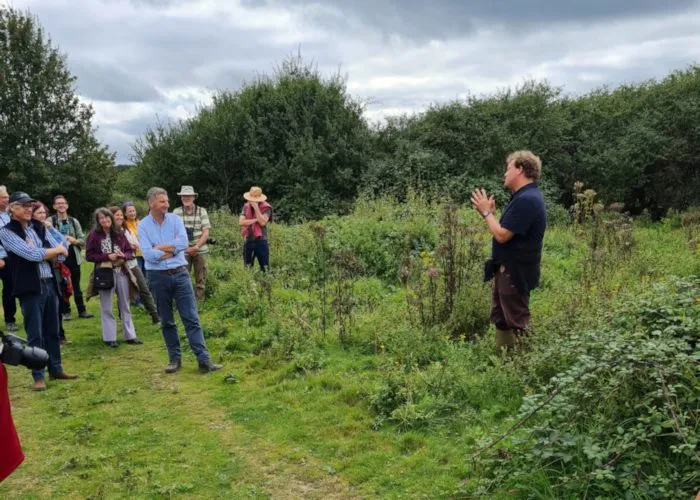
Charles Burrell, owner of Knepp Castle, a 3,500 acre estate that has been in the Burrell family for 220 years, led the session and the guided tour of points of interest in the estate. The visit was also supported by Penny Green. Penny is Knepp's resident ecologist, managing the Knepp Safaris team, volunteers and research students, and co-ordinating the biological monitoring of the rewilding project.
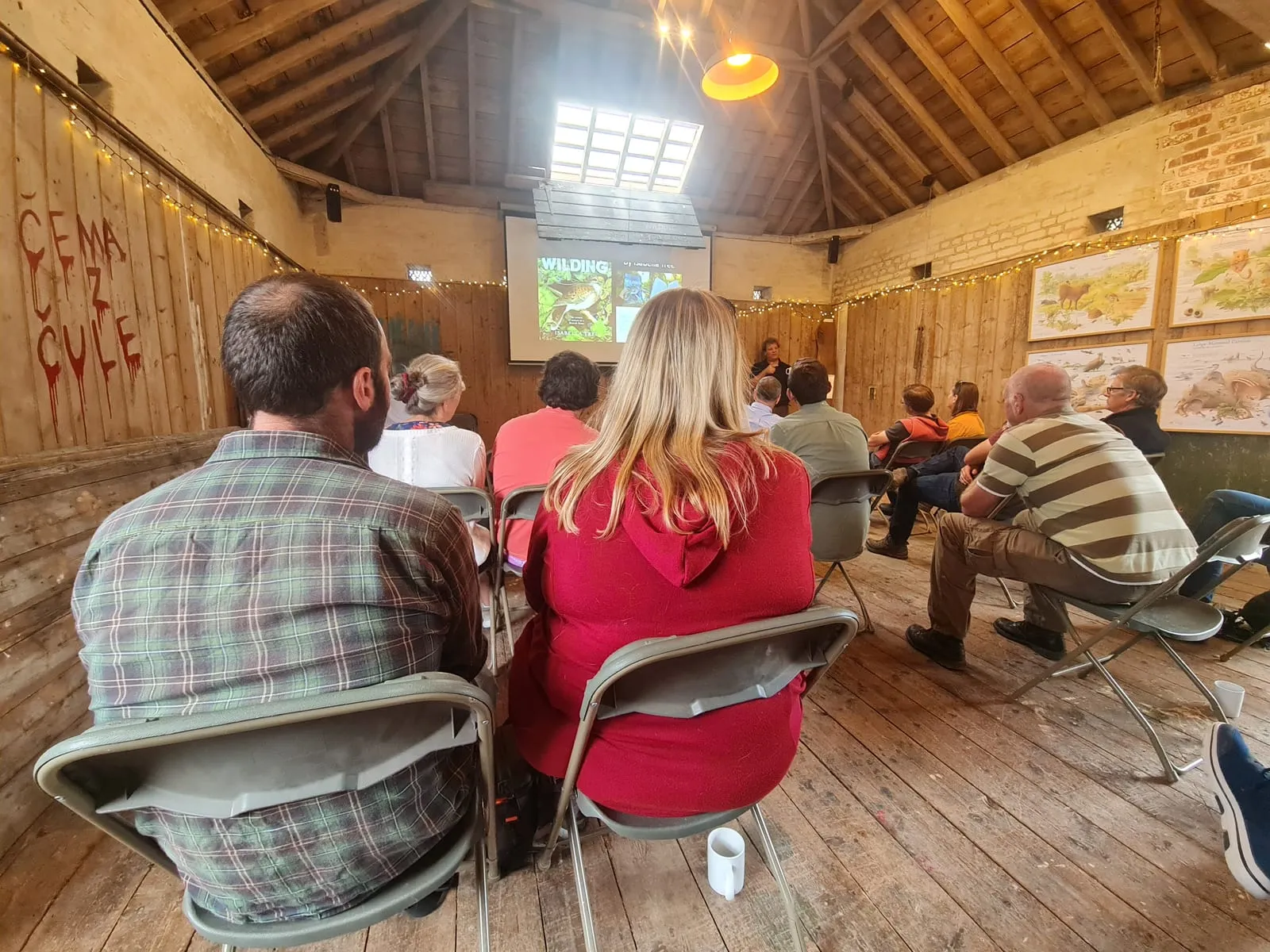
All the attendees were delighted with the visit, gaining insights into options for assisting wildlife in a wide variety of ways. For example we heard about the projects re-introducing beaver and white storks. We had the opportunity to discuss methods of protecting nationally endangered birds such as Turtle Doves.
More information on the Knepp wilding projects can be found here. Information on the Knepp Safaris can be found here, information on the Knepp Estate can be found here, information on Knepp meat can be found here.
More information on the RSPB's Turtle Dove Conservation and the work of Nicole Khan can be found here.